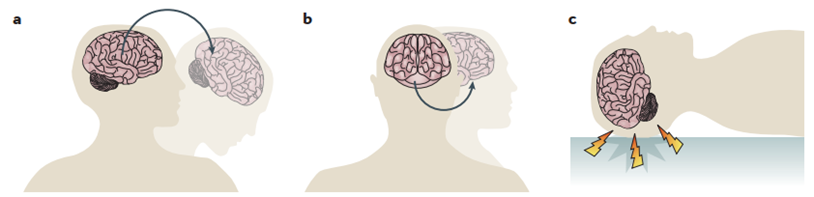
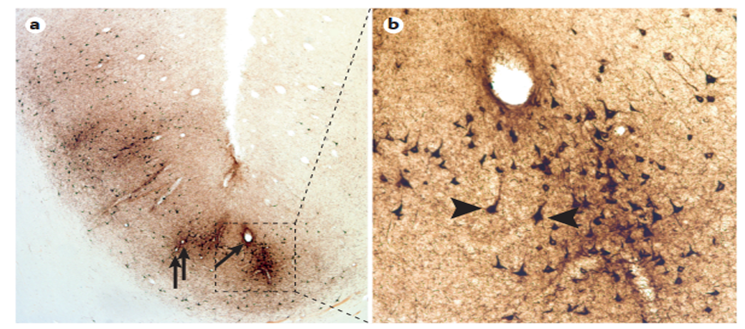
脑震荡(轻型 TBI)后的神经病理学改变包括轻型多灶性轴突损伤以及小胶质细胞(中枢神经系统的固有先天免疫细胞)的激活和微出血72-73。多灶性轴突损伤通常涉及穹窿、胼胝体、皮质下白质和小脑74。不完全一致的发现包括 TAR DNA 结合蛋白 43(TAR DNA-binding protein 43,TDP 43)-免疫阳性神经突起和配对螺旋样纤维(paired helical filament,PHF)-tau 的少量灶性聚集,形成神经原纤维缠结(neurofibrillary tangles,NFT)或者神经丝74。
尸检中观察到的 tau 聚集是 CTE 的一个关键发现。tau 是一种微管稳定蛋白,在 TBI 后 tau 的上调被认为是一种异常的尝试,以稳定被创伤破坏的微管。另一种假设是 tau 的异常磷酸化导致其正常微管结合功能的丧失并促进聚集。在其他情况下,Aβ 聚集可能诱导 tau 磷酸化和聚集86,临床前发现表明,在缺乏持续的触发因素的情况下,重复性脑震荡和/或亚脑震荡头部创伤会引发 tau 病理表现并扩散到邻近神经元87。然而,不知道 TBI 后的 tau 聚集是否在延迟性神经退行性变和 CTE 的发展中起因果作用,或者它们是否是先前损伤的标志。
1. Cassidy, J. D. et al. Incidence, risk factors and prevention of mild traumatic brain injury: results of the WHO Collaborating Centre Task Force on Mild Traumatic Brain Injury. J. Rehabil. Med. 36, 28–60 (2004).
2. Centers for Disease Control and Prevention, National Center for Injury Prevention and Control. Report to congress on mild traumatic brain injury in the United States: steps to prevent a serious public health problem [R]. Atlanta (GA):Centers for Disease Control and Prevention, 2003:1-30.
3. Position statement: definition of traumatic brain injury